
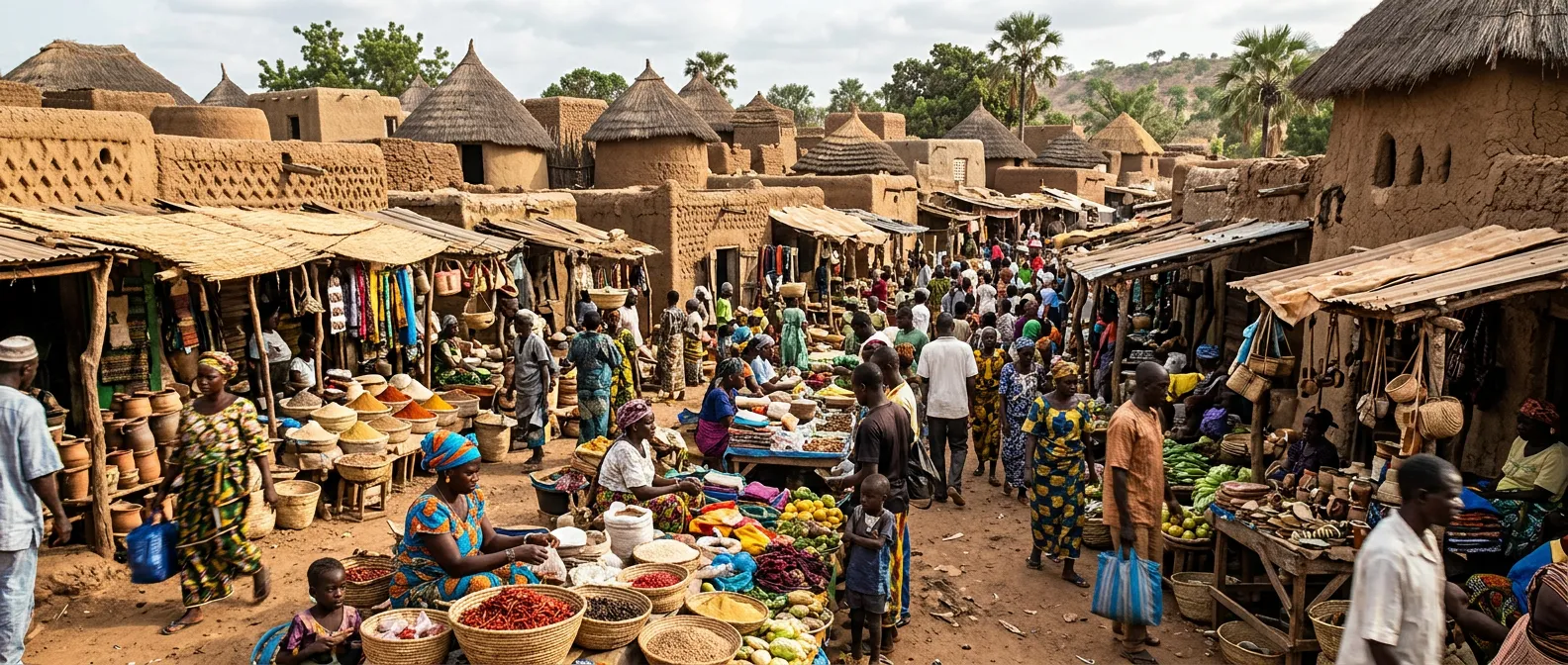
Planning a trip to Burkina Faso? Before you pack your bags, you need to know whether your passport allows visa-free entry or if you will need to apply for a visa in advance. Burkina Faso’s visa policy is shaped by its membership in ECOWAS (the Economic Community of West African States), bilateral agreements with individual nations, and a landmark September 2025 policy that removed visa fees for all African travellers.
This guide covers every country whose citizens can enter Burkina Faso without a visa, the maximum stay durations, visa-on-arrival options, and the documents you still need even when a visa is not required.
Complete List of Visa-Free Countries for Burkina Faso
As of 2026, citizens of approximately 19 countries can visit Burkina Faso without obtaining a visa before travel. These exemptions fall into three categories: ECOWAS member states, other African nations with bilateral agreements, and non-African countries with specific visa-waiver arrangements.
The visa-free entry list is maintained by Burkina Faso’s Ministry of Security and is cross-referenced with Timatic, the international travel document database used by airlines worldwide.
ECOWAS Member States (Visa-Free Movement)
The largest group of visa-free travellers to Burkina Faso comes from fellow ECOWAS member states. Under the Protocol on Free Movement of Persons, Right of Residence and Establishment (signed 30 April 1980), citizens of all ECOWAS nations can enter Burkina Faso without a visa.
The 15 ECOWAS member states whose citizens enjoy visa-free entry are:
| Country | Region |
|---|---|
| Benin | West Africa |
| Cabo Verde (Cape Verde) | West Africa |
| Cote d’Ivoire (Ivory Coast) | West Africa |
| Gambia | West Africa |
| Ghana | West Africa |
| Guinea | West Africa |
| Guinea-Bissau | West Africa |
| Liberia | West Africa |
| Mali | West Africa |
| Niger | West Africa |
| Nigeria | West Africa |
| Senegal | West Africa |
| Sierra Leone | West Africa |
| Togo | West Africa |
ECOWAS nationals can stay in Burkina Faso for up to 90 days without a visa. They need only a valid national passport or ECOWAS travel document and proof of yellow fever vaccination.
Important note: In January 2024, Burkina Faso, Mali, and Niger announced their withdrawal from ECOWAS, forming the Alliance of Sahel States. While this withdrawal has been signalled, as of mid-2026 the free movement protocol continues to apply for citizens of these nations. Travellers should monitor developments, as the visa-free arrangement between Burkina Faso and remaining ECOWAS states could change.
Other African Visa-Free Nations
Beyond the ECOWAS bloc, several other African countries have bilateral visa-waiver agreements with Burkina Faso:
| Country | Maximum Stay | Notes |
|---|---|---|
| Central African Republic | 90 days | Bilateral agreement |
| Mauritania | 90 days | Bilateral agreement |
| Morocco | 90 days | Visa abolition agreement signed 23 October 2020, effective 22 December 2020 |
| Mali | Visa-free | ECOWAS + Alliance of Sahel States |
| Niger | Visa-free | ECOWAS + Alliance of Sahel States |
Morocco’s visa-free arrangement is relatively recent. The bilateral visa abolition agreement was signed on 23 October 2020 and came into force on 22 December 2020, replacing the previous visa-on-arrival arrangement for Moroccan citizens.
September 2025: Burkina Faso Scraps Visa Fees for All African Travellers
On 12 September 2025, Burkina Faso made a significant policy announcement: the removal of visa fees for all African nationals. Security Minister Mahamadou Sana declared following a cabinet meeting chaired by military leader Captain Ibrahim Traore:
“From now on, any citizen from an African country wishing to go to Burkina Faso will not pay any amount to cover visa fees.”
This policy does not make all African nationals visa-exempt. Instead, it removes the cost of the visa. African visitors must still submit an online visa application through the eVisa portal (evisaburkina.bf) for review and approval. The key difference is that approved applicants do not pay the standard visa fee.
This move aligns Burkina Faso with other African nations pursuing continental free movement, including Ghana, Rwanda, and Kenya, which have all eased travel requirements for African visitors in recent years. Captain Traore, who seized power in a 2022 coup, has positioned himself as a champion of Pan-Africanism and has used this policy to reinforce that stance.
Who Benefits from the Fee Waiver?
- Citizens of African Union member states who are NOT from visa-exempt countries
- Examples include citizens of Nigeria (already visa-free via ECOWAS), South Africa, Egypt, Ethiopia, Tanzania, and the Democratic Republic of Congo
- The fee waiver applies to both tourist and business visas applied for through the eVisa system
Non-African Visa-Free Countries
A small number of non-African nationalities also enjoy visa-free entry to Burkina Faso:
| Country/Region | Maximum Stay | Notes |
|---|---|---|
| Hong Kong (SAR passport) | 14 days | Hong Kong Immigration Department confirmed |
| Singapore | 30 days | Per Singapore Ministry of Foreign Affairs |
| United Arab Emirates | Visa-free | Per UAE Ministry of Foreign Affairs |
These arrangements are based on bilateral diplomatic agreements. Hong Kong and UAE citizens are not listed by Timatic as visa-exempt in all sources, so travellers holding these passports should confirm with the nearest Burkina Faso embassy before departure.
Non-Ordinary Passport Exemptions
Holders of diplomatic, official, or service passports from the following countries do not require a visa for Burkina Faso, regardless of whether ordinary passport holders need one:
- Brazil
- China (also: passports endorsed “for public affairs” allow a 90-day stay)
- Congo (Republic of)
- Cuba
- Russia
- Taiwan
- Turkey
Additionally, passengers with an Interpol passport travelling on duty can obtain a visa on arrival. They must have one passport photo, and the BCN Interpol office in Burkina Faso must be informed before arrival.
Visa-on-Arrival Countries
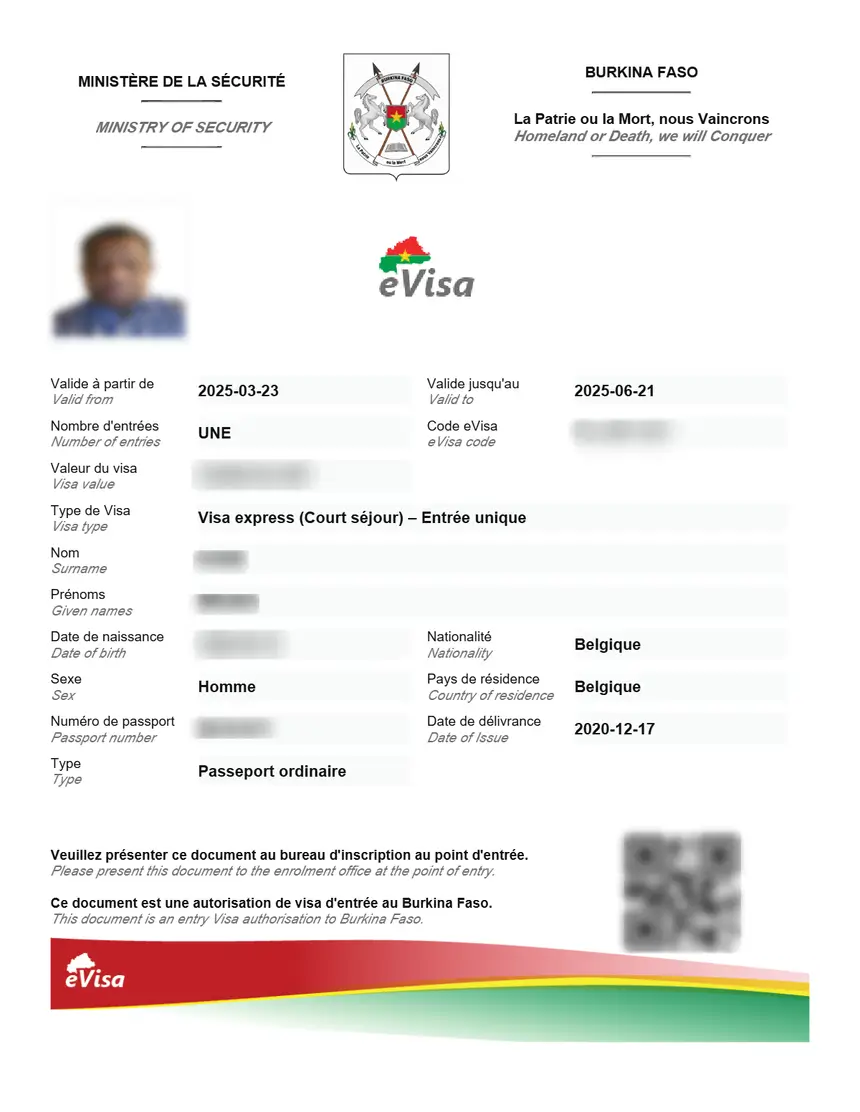
For travellers who are not visa-exempt, Burkina Faso has historically offered visa-on-arrival facilities. However, at present, visas are issued upon arrival only in specific exceptional circumstances. The eVisa system (launched 17 August 2023) has largely replaced the visa-on-arrival process.
The previous visa-on-arrival cost was 94,000 CFA francs (approximately 143 euros) for a single-entry visa valid for up to 3 months, or 122,000 CFA francs (approximately 186 euros) for a multiple-entry visa.
Countries whose citizens were previously eligible for visa-on-arrival include:
| Country | Country | Country |
|---|---|---|
| All EU member states (except Cyprus) | Argentina | Australia |
| Brazil | Canada | Chad |
| Colombia | Comoros | Cuba |
| DR Congo (Ouagadougou airport only) | Djibouti | Egypt |
| Eritrea | Iceland | Kenya |
| Libya | Liechtenstein | New Zealand |
| Norway | Paraguay | Sao Tome and Principe |
| Somalia | Switzerland | Taiwan |
| Tunisia | United Kingdom | Venezuela |
Most of these nationalities should now apply through the eVisa portal rather than expecting a visa on arrival.
What Visa-Free Entry Still Requires
Even if your passport allows visa-free entry to Burkina Faso, you must meet these requirements at the port of entry:
Valid Passport
Your passport must be valid for at least six months beyond your intended date of entry. Immigration officers will deny entry to travellers with passports that have less than six months of remaining validity.
Yellow Fever Vaccination Certificate
Burkina Faso requires proof of yellow fever vaccination from all travellers arriving from countries with risk of yellow fever transmission. Even travellers from non-risk countries are strongly advised to carry their yellow fever certificate, as immigration officers frequently check it at land borders and airports.
Proof of Accommodation and Return Travel
While not always enforced, immigration officers may ask for proof of accommodation (hotel booking or host invitation letter) and a return or onward ticket. Having these documents ready can prevent delays.
Sufficient Funds
Travellers may be asked to demonstrate they have sufficient funds for their stay. There is no officially published minimum amount, but carrying bank statements or cash equivalent to at least 50,000 CFA francs per day of stay is recommended.
Recent Policy Changes (2025-2026)
Several important changes have affected Burkina Faso’s visa policy in the past two years:
September 2025: Visa Fee Removal for African Nationals
As detailed above, all African citizens became eligible for free visas through the eVisa system, though the visa application and approval process still applies.
December 2025: Travel Ban on United States Nationals
Effective 31 December 2025, Burkina Faso imposed a travel ban on United States nationals. Entry and transit is refused to US citizens, even those not leaving the aircraft and proceeding by the same flight. This was enacted in retaliation for US travel restrictions on Burkinabe citizens, in coordination with Mali which imposed a similar ban.
August 2023: eVisa Portal Launch
The eVisa portal (applicant.visaburkina.bf) was launched on 17 August 2023, replacing the previous paper-based visa application process. All non-visa-exempt nationalities can now apply for their visa online.
ECOWAS Withdrawal
In January 2024, Burkina Faso, Mali, and Niger announced their withdrawal from ECOWAS. While the practical effects on free movement are still being clarified, the long-term implications for visa-free travel within West Africa remain uncertain.
Frequently Asked Questions
Which countries are visa-free for Burkina Faso?
Citizens of all 15 ECOWAS member states, plus Central African Republic, Mauritania, Morocco, Hong Kong, Singapore, and the United Arab Emirates can enter Burkina Faso without a visa. Additionally, as of September 2025, all African nationals can obtain a free visa through the eVisa system.
Do I need a visa to visit Burkina Faso from the UK?
Yes. United Kingdom citizens need a visa to enter Burkina Faso. UK nationals can apply through the eVisa portal at applicant.visaburkina.bf or at a Burkina Faso embassy. UK citizens were previously eligible for visa-on-arrival, but the eVisa system is now the preferred method.
Do I need a visa to visit Burkina Faso from the United States?
Yes, and more importantly, as of 31 December 2025, entry and transit is refused to US nationals entirely. This is a retaliatory travel ban enacted by the Burkinabe government.
Can I get a visa on arrival in Burkina Faso?
Visa-on-arrival is now available only in specific exceptional circumstances. The standard method for obtaining a visa is through the eVisa portal at applicant.visaburkina.bf, launched in August 2023.
How long can ECOWAS citizens stay in Burkina Faso without a visa?
ECOWAS citizens can stay for up to 90 days without a visa. They need a valid passport or ECOWAS travel document and a yellow fever vaccination certificate.
Is Burkina Faso visa-free for South African citizens?
South African citizens are not visa-exempt but benefit from the September 2025 policy that removed visa fees for all African nationals. They must still apply for a visa through the eVisa system, but the fee is waived.
What documents do I need for visa-free entry to Burkina Faso?
You need a passport valid for at least six months, a yellow fever vaccination certificate, proof of accommodation, and evidence of sufficient funds. A return or onward ticket is also recommended.